
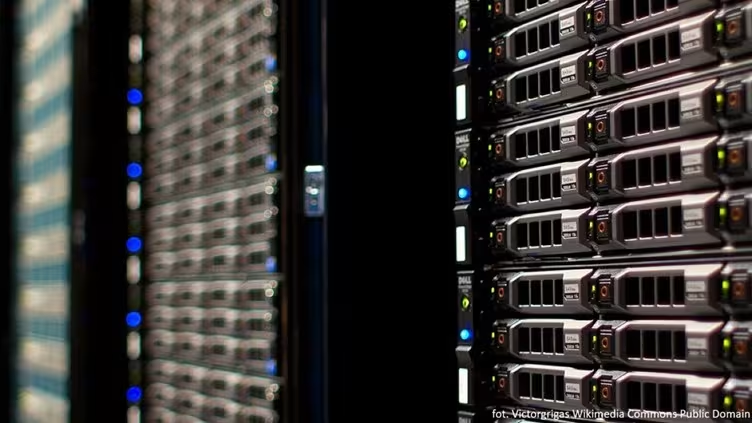
ARE "THE CLOUD" AND AI REALLY VIRTUAL? ☁️
💻 NO---IT'S CONCRETE, STEEL, AND MASSIVE POWER AND WATER RESOURCES!
While we often think of Artificial Intelligence in terms of code, its physical infrastructure is becoming a major flashpoint in Poland and across the globe. Data centers are no longer viewed as neutral technical facilities; they have become a source of intense social and political conflict.
Here is what you MUST know about the "physical cost" of digital expansion:
🏗️ SHOCKING SCALE
Power connection requests for new data centers now involve energy levels that, a decade ago, were only associated with large-scale power plants. A prime example is Reguły near Warsaw, where a planned facility is expected to consume as much electricity as the entire city of Bydgoszcz!
💧 SHARED RESOURCES
Data centers place a staggering burden on our common resources:
- Water: Within five years, US data centers could consume as much water for cooling as 18.5 million households.
- Energy: In the US, their rapid expansion contributed to electricity price hikes of over 21% between 2021 and 2024, significantly outpacing inflation.
- Daily Life: For locals, this means constant noise, 24/7 light pollution, and heavy tanker traffic delivering fuel for backup generators right under YOUR window.
🇺🇸 LESSON FROM AMERICA: "RULES FIRST, RACE SECOND"
In the US, over 230 organizations have called for a national moratorium on new data centers. Their goal isn't to stop technology, but to buy time to create regulations that protect health, families, and the environment from the "out-of-control damage" the industry is already causing. In the last two years alone, protests have hit projects worth over $64 billion.
🤖 WHAT ABOUT THE JOB MARKET?
AI development brings social risks alongside environmental ones. Experts warn that AI could eliminate half of all entry-level white-collar positions and could drive overall unemployment up by 20% in the next five years.
⚖️ WHO WILL PAY FOR THIS?
The core issue is that the benefits of these investments are global and dispersed, while the costs are local and immediate. While the state pursues a "digital hub" status, local residents face rising power bills and a strained electrical grid.
The limits of growth are no longer technical---they are environmental, social, and political. It is time for a serious debate on who decides the direction of our local development.
👇 What do you think? Should technological progress take priority over the well-being of local communities? We look forward to your comments!